After some queries were raised by one of our suppliers, we have been looking again at our choices for balanced slide valves. We thought a ‘Tech Special’ edition outlining our choices and decisions for Yeo and Exe would be good to share.
As railways developed, train loads and speeds grew and so locomotives had to give more power. Balanced slide valves were developed to reduce valve gear loads, and consequent wear rates, when boiler pressures and valve sizes both had to be increased. Their heyday was around the turn of the last century when they were used quite extensively, particularly in the USA. They fell out of use when higher superheat temperatures tipped the balance decisively in favour of piston valves. Whilst piston valves have their own challenges (some may favour poppet valves, which have theirs also), history shows that they became the preferred valves for double acting steam locomotives using superheated steam.
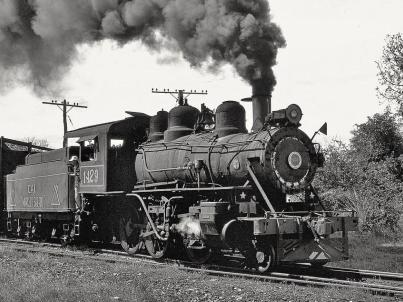
Fig1 A Baldwin locomotive typical of those fitted with balanced valves.
However piston valves were not generally adopted for narrow gauge locomotives in the British Isles because, in mainline terms, they were small and slow, and they were rarely superheated. Slide valves reigned supreme in narrow gauge world, particularly in 1895 when ours were designed.
So, why do we need balanced valves for Yeo and Exe? The first part of the answer is that the original steam chests are not large enough to incorporate piston valves of sufficient diameter. Trying to make piston valves fit would have radically altered the front three-quarter look of the new locomotives and was ruled out. The final decision then required assessment of how well the original slide valves would work in the new engines. The critical change is that the original locomotives used 160 psi boiler pressure but our new ones will use 200 psi. This upgrade was made to produce locomotives capable of hauling six coach trains (the originals were limited to four) giving more operational flexibility and, potentially, better returns per train. However the increase in pressure means that our valves would be much harder to move than the originals and create possibly excessive loads on the valve gear. These concerns are alleyed by relieving some of the pressure on the valves and so balanced slide valves became the necessary choice. The reduced pressures allied to modern oils also allow a moderate degree of superheat to be used without fear of damage to the port faces.
|
Original MW valve |
Original valve at 200psi |
Yeo/Exe valve |
|
|
Length and width in |
7 x 8.5 |
7 x 8.5 |
7 3/32 x 8.5 |
|
Area in^2 |
59.5 |
59.5 |
60.3 |
|
Area balanced* in^2 |
0 |
0 |
34.5 (57%) |
|
Area to steam in^2 |
59.5 |
59.5 |
25.8 |
|
Max. pressure psi |
160 |
200 |
200 |
|
Normal Force lbf |
9520 |
11900 |
5160 |
* Area to be balanced = steam port + exhaust port + 2*bridges (Phillipson)
= 35.875 in^2 (59%)
Table highlighting the load on the original valves under 160psi, under 200psi and with the balanced valves at 200 psi
What design of balancing is most suited to our needs? Historically there were three main genres to their design, all of which claimed to shield part of the valve from steam chest pressure as the valve slid back and forth over the port face. Keeping steam at high pressure from entering a sliding chamber is difficult, and making sure of reliably achieving that happy situation throughout thousands of miles of maintenance free use is even more so.
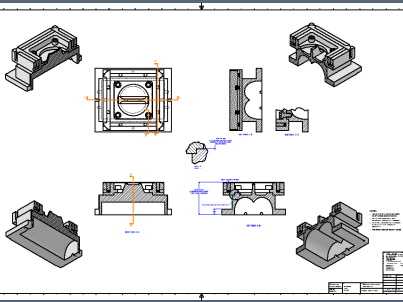
All three of the designs that were used in quantity over 100 years ago seem to have potential for wear and leakage, which would defeat the object of using them. Direct experience of them in mainline use has long since died and the historic record and modern engineering knowhow are all we have to guide us. Until recently research would have taken much effort, but AI has changed all that. For those interested the two links will take you to reports on a) a comparison of the various types of balanced valves, and b) the design of a Richardson type valve for Yeo and Exe.
Balanced Slide Valves: A Technical Review
The Engineering of a Richardson Balanced Slide Valve
Both these were completed in a couple of days. The engineering drawings have been updated and revised quotations for their manufacture are being sought.
Our only real concern in getting the locomotives built now revolves around money. We are very close to the point where the boiler order will have to be postponed. Manufacturing of valves, pistons and other motion parts would continue at a moderate pace but delaying the boiler would be a bitter disappointment.
Progress towards YEO and EXE steaming along the Lynton & Barnstaple railway again doesn’t happen by accident—it happens because people like you step up.
If seeing these designs being integrated into our growing store of components inspires you, please consider making a donation today. Every contribution directly moves this project closer to steam.
If you are perhaps thinking of joining The 762 Club to become a team member bringing Yeo and Exe back to the Lynton and Barnstaple Railway then please look at our Contributing page. Alternatively please contact jonpain762@outlook.com Every member is welcomed and appreciated in our family.
Becoming a sponsor by buying a part, or two, is another great way of becoming involved in bringing these iconic locomotives back to the Lynton and & Barnstaple Railway. Whilst the boiler is our main priority there are many other vital components of steam locomotive that might be tempting. If joining Team Valve or Team Piston is not to your taste, I just mention superheaters, injectors and exhaust nozzles to whet your appetite. Our website has many items to sponsor but, if the part you fancy is not listed, just mention what you wish your name to be associated with.
Straightforward donations are always gratefully received.
Lloyds Bank Sort code 30-90-78
Acc no. 29610160
THE 762 CLUB LTD.
If you are able to Gift Aid please confirm to Jon Pain (jonpain762@outlook.com) or write:
Jon Pain
26 Oaklands
Bideford
Devon
EX39 3HW